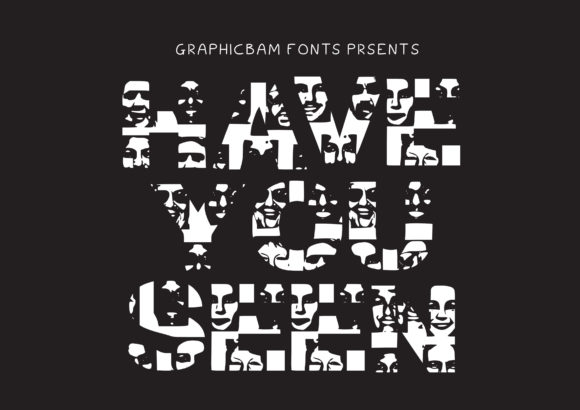
Have You Seen: Integrating a Bold Display Font into Professional Design Workflows
In the landscape of digital and print design, typography is rarely just about readability; it is about communication, hierarchy, and immediate visual impact. Among the vast array of typefaces available to designers, marketing professionals, and creative entrepreneurs, some fonts serve as subtle background textures while others demand attention. Have You Seen falls firmly into the latter category. It is not merely a typeface; it is a conceptual art piece rendered in letters. Featuring faces that constitute the body of each character, this bold and incredibly unique display font offers a level of novelty that can elevate any creation, provided it is used with strategic intent.
For professionals aged 20 to 50 who manage complex projects—from brand identity launches to educational materials—understanding where a specific tool fits within a broader workflow is essential. This article explores how to integrate Have You Seen into practical design processes, ensuring that its distinctive nature enhances rather than hinders your project outcomes.
Understanding the Tool: More Than Just Letters
Before implementation, one must understand the asset. Have You Seen is a display font characterized by its illustrative approach to letterforms. Instead of standard geometric or organic curves, the strokes are composed of human faces. This creates an immediate psychological connection with the viewer, evoking curiosity, emotion, and engagement. Because of this complexity, it functions differently from standard sans-serif or serif fonts used for body copy.
The primary value proposition of this font lies in its ability to act as a focal point. In a workflow involving content creation, this font should be reserved for moments where you need to arrest the viewer’s attention. It is a high-impact asset that requires careful handling to maintain professional quality control. When you decide to include Have You Seen in your library, you are adding a specialized instrument to your kit, similar to adding a macro lens to a photographer’s bag—it has a specific use case that yields exceptional results when applied correctly.
Strategic Placement in Creative Projects
Integrating a font like Have You Seen requires foresight during the planning phase of any creative project. Whether you are designing a poster, a social media graphic, or a book cover, the placement of such a dominant typeface dictates the success of the overall composition. Here is how to approach its usage across different stages of production.
Brand Identity and Logo Design
For small business owners and entrepreneurs, establishing a memorable brand identity is critical. While using a face-based font for a full logo can be risky due to legibility issues at small scales, it can be highly effective for specific brand elements. Consider using Have You Seen for:
- Slogans or Taglines: A short phrase set in this font can become a recognizable brand signature.
- Event Branding: For workshops, seminars, or community events where "human connection" is the theme, this font visually reinforces the message.
- Secondary Logotypes: Use it sparingly alongside a more traditional primary logo to add personality without compromising recognition.
When implementing this in a brand guideline document, ensure you specify clear restrictions on size and color contrast. The intricate details of the faces can blur if scaled down too much, leading to a loss of clarity and professionalism.
Marketing Materials and Advertising
In the realm of marketing, the goal is often to stop the scroll or catch the eye in a crowded physical space. Have You Seen is an excellent asset for headlines in email campaigns, blog headers, and printed flyers. Its unique structure naturally draws the eye, making it ideal for call-to-action (CTA) buttons or promotional banners.
However, integration here requires balance. If your marketing material includes dense text, such as product descriptions or detailed terms and conditions, do not attempt to force this font into those sections. Maintain a clear hierarchy by pairing Have You Seen with a clean, neutral sans-serif font for body text. This contrast ensures that the headline grabs attention while the supporting information remains accessible and easy to read. This combination supports efficiency in communication, allowing the audience to process both the emotional hook and the factual data simultaneously.
Workflow Integration and Technical Considerations
For freelancers, publishers, and educators who frequently switch between software platforms, technical compatibility is a major factor in workflow efficiency. Before purchasing or installing Have You Seen, verify the file formats available. Typically, modern display fonts come in OpenType (.otf) and TrueType (.ttf) formats, which are compatible with most industry-standard tools like Adobe Creative Cloud, Affinity Suite, Canva, and Microsoft Office.
Organizing your font library is crucial for long-term use. Create a dedicated folder or collection for "Display" or "Novelty" fonts. This separation prevents accidental misuse in documents where legibility is paramount. By keeping Have You Seen distinct from your workhorse fonts like Arial, Helvetica, or Roboto, you reduce cognitive load and speed up your selection process during tight deadlines.
Pairing Strategies
A common pitfall in design is overcomplicating the typographic palette. Since Have You Seen is visually heavy and complex, it pairs best with minimalist typefaces. The simplicity of the partner font allows the display font to shine without competition. Effective pairings might include:
- Clean Sans-Serifs: Fonts like Montserrat, Lato, or Open Sans provide a neutral backdrop that lets the faces in Have You Seen take center stage.
- Classic Serifs: For a more editorial or academic look, pairing with a serif like Garamond or Playfair Display can create a sophisticated juxtaposition between the modern novelty of the display font and the timelessness of the serif.
Test these pairings early in your design process. Create mockups to ensure that the x-heights and weights complement each other. Consistency in weight and scale is vital for maintaining a cohesive aesthetic throughout your project.
Use Cases Across Industries
The versatility of Have You Seen extends beyond traditional graphic design. Its thematic resonance makes it suitable for various sectors.
Education and Publishing
Educators and bloggers can utilize this font to make learning materials more engaging. For instance, in textbooks or online courses discussing psychology, sociology, or communication, using Have You Seen for chapter titles or key concepts can reinforce the subject matter. It adds a layer of visual interest that can help retain student attention. However, always prioritize accessibility; ensure sufficient contrast and avoid using it for instructional text that requires precise decoding.
Events and Entertainment
For event planners and hobbyists organizing parties, theater productions, or local festivals, this font is a natural fit. Posters, ticket designs, and social media announcements benefit from the human element embedded in the letters. It suggests that the event is people-centric and lively. When designing these assets, consider how the font interacts with imagery. If your background features photographs of people, ensure there is enough negative space so the facial details in the font do not clash with the photographic subjects.
Quality Control and Long-Term Viability
As with any design tool, consistent application is key to building trust with your audience. When integrating Have You Seen into your routine, establish a checklist for review. Ask yourself:
- Is the context appropriate? Does the tone of the message match the playful yet bold nature of the font?
- Is it legible? Have I tested the font at the intended output size? Small screens or low-resolution prints may obscure the facial details.
- Is it balanced? Does the surrounding layout support the visual weight of the typeface, or does it feel overwhelming?
By adhering to these checks, you ensure that Have You Seen serves its purpose effectively. It is not a font for every occasion, but when the occasion calls for uniqueness and emotional resonance, it is an unparalleled asset. Its potential to elevate any creation lies in its ability to transform ordinary text into a visual experience. For the modern creator, having such a specialized tool in their repertoire allows for greater expressive range and more impactful communication.
Conclusion
Ultimately, the decision to incorporate Have You Seen into your design workflow should be driven by strategic necessity rather than trend-following. It is a bold statement maker that demands respect for its form and function. By understanding its characteristics, pairing it wisely, and applying it with intentionality, you can leverage its unique qualities to enhance your projects. Whether you are launching a new brand, creating educational content, or designing an event, this font offers a distinctive voice that can cut through the noise. Keep it organized in your library, test it rigorously, and let its inherent creativity drive your next great design.