Evaluating Lowpoly: A Practical Guide to Using This Distinctive Display Type
In the vast landscape of digital typography, finding a typeface that balances visual impact with functional readability is often a challenge. Designers frequently search for fonts that can convey specific moods without overwhelming the viewer. Lowpoly has emerged as a notable option in this space, offering a geometric, playful aesthetic that stands out from traditional serif and sans-serif families. For professionals aged 20 to 50 who are evaluating design resources, understanding the nuances of Lowpoly requires looking beyond its initial visual appeal to consider its technical specifications, versatility, and appropriate use cases.
This article provides an objective analysis of Lowpoly, examining its characteristics, comparing it to broader typographic categories, and outlining when it serves as an effective tool versus when other options might be more suitable. The goal is to help designers make informed decisions based on project requirements rather than fleeting trends.
Understanding the Lowpoly Aesthetic
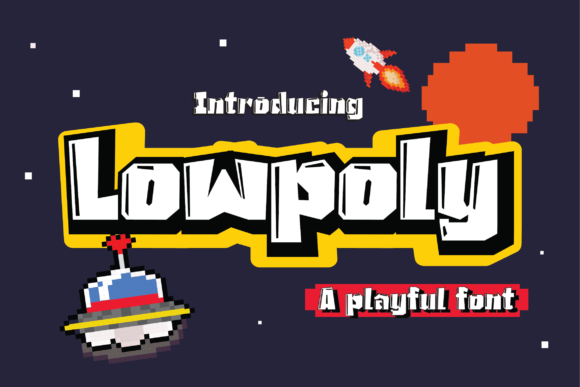
Lowpoly is classified as a display font, meaning it is designed primarily for large sizes where legibility at small scales is less critical than visual impact. Its name derives from "low polygon," referencing the 3D modeling technique that uses a reduced number of polygons to create shapes. This influence is evident in the font’s sharp angles, faceted letterforms, and geometric construction. Unlike organic or hand-drawn scripts, Lowpoly relies on precision and structure, giving it a modern, almost digital-native feel.
The font’s distinctiveness lies in its ability to merge playfulness with a structured grid. The characters often feature cut corners and angular transitions that mimic the look of low-poly 3D renders. This makes it particularly effective for designs that aim to evoke themes of technology, gaming, creativity, or youthful energy. However, this same geometric rigidity means it lacks the fluidity of cursive fonts or the neutrality of standard body text fonts like Arial or Helvetica.
Visual Characteristics and Readability
When evaluating any font, readability is paramount. Lowpoly excels in headlines, titles, and short phrases where the eye can appreciate the intricate details of each character. The high contrast between thick and thin strokes, combined with the angular cuts, creates a dynamic rhythm that draws attention. However, this complexity can become a hindrance in longer passages of text. The sharp angles may cause eye fatigue if used for paragraphs, making it unsuitable for body copy in most contexts.
Note: While Lowpoly is visually striking, its legibility drops significantly below 18-point size in many applications. Designers should treat it as a headline-only font to maintain clarity and user experience.
Comparing Lowpoly to Other Typographic Styles
To understand where Lowpoly fits in a designer’s toolkit, it is helpful to compare it with other common styles. Typography choices are rarely binary; they exist on a spectrum of formality, ornamentation, and function.
Lowpoly vs. Standard Sans-Serif Fonts
Standard sans-serif fonts (such as Roboto, Open Sans, or Montserrat) are chosen for their neutrality and versatility. They recede into the background, allowing content to take center stage. In contrast, Lowpoly is assertive. It demands attention and sets a tone. If a project requires a clean, professional, and unobtrusive interface—such as a corporate dashboard or a legal document—standard sans-serifs are the superior choice. Lowpoly would introduce unnecessary visual noise in these contexts.
However, for branding projects that need to stand out in a crowded market, such as a startup logo or a festival poster, Lowpoly offers a level of personality that neutral fonts cannot provide. It acts as a visual hook, whereas sans-serifs act as a foundation.
Lowpoly vs. Handwritten and Script Fonts
Script and handwritten fonts convey human touch, warmth, and informality. They are often used in invitations, lifestyle blogs, or artisanal branding. Lowpoly shares the informal nature of script fonts but achieves it through geometry rather than flow. Where a script font feels organic and imperfect, Lowpoly feels calculated and precise.
This distinction is crucial for brand identity. A brand aiming for a "handcrafted" or "personal" vibe might find Lowpoly too rigid. Conversely, a brand associated with innovation, gaming, or modern art might find Lowpoly’s structured playfulness more aligned with its values. The tradeoff here is between emotional warmth (script) and energetic precision (Lowpoly).
Best-Fit Use Cases for Lowpoly
Identifying the right context for Lowpoly ensures that the font enhances the message rather than distracting from it. Based on its structural properties, several categories emerge where Lowpoly performs exceptionally well.
- Gaming and Esports: The low-poly aesthetic is deeply rooted in video game culture. Titles, leaderboards, and UI elements for indie games or mobile apps often benefit from Lowpoly’s tech-forward look.
- Children’s Products and Education: The playful, blocky nature of the letters appeals to younger audiences. Book covers for children’s stories, educational app icons, and toy packaging can use Lowpoly to signal fun and engagement without appearing childish in a negative way.
- Event Posters and Flyers: For concerts, art exhibitions, or community events, High-impact headlines are essential. Lowpoly’s bold presence ensures that key information grabs attention from a distance.
- Brand Logos and Wordmarks: Startups in creative industries, tech hubs, or youth-oriented markets may choose Lowpoly to signal innovation and approachability. Its unique shape aids in memorability.
- Social Media Graphics: Quotes, promotional banners, and Instagram posts often require text that stands out against busy backgrounds. Lowpoly’s distinct edges help separate text from imagery effectively.
Limited Applications and Tradeoffs
No single font is a universal solution. Recognizing the limitations of Lowpoly is just as important as acknowledging its strengths. Misapplication can lead to poor user experience and diluted brand messaging.
Body Text and Long-Form Content
As previously noted, Lowpoly is not designed for extended reading. Using it for blog posts, articles, or manual instructions will likely frustrate readers. The angular forms break the smooth visual flow required for comfortable reading. In these cases, pairing Lowpoly with a highly readable sans-serif or serif font for body text is a best practice. This combination leverages Lowpoly’s impact for headers while maintaining usability for content.
Formal and Corporate Environments
In sectors such as finance, law, healthcare, or government, trust and stability are key communication goals. Lowpoly’s playful and geometric nature may undermine perceptions of seriousness and authority. A bank using Lowpoly for its primary branding might appear frivolous or unstable. In these fields, traditional serifs or clean sans-serifs remain the safer, more professional choice.
Accessibility Considerations
Design inclusivity is a growing priority. Fonts with complex shapes, high contrast, or irregular spacing can pose challenges for users with dyslexia or visual impairments. Lowpoly’s sharp angles and varied stroke widths may reduce accessibility scores compared to simpler, more uniform typefaces. When designing for broad audiences, especially digital interfaces, designers should test Lowpoly for accessibility compliance and consider providing alternative text styling options.
Decision Factors: Choosing Lowpoly or Alternatives
When deciding whether to incorporate Lowpoly into a project, consider the following decision matrix:
- What is the primary goal? If the goal is to grab attention quickly and convey energy, Lowpoly is a strong candidate. If the goal is to communicate complex information clearly, prioritize readability over style.
- Who is the target audience? Younger demographics, gamers, and creative professionals are more likely to respond positively to Lowpoly’s aesthetic. Older or more conservative audiences may prefer traditional typography.
- Where will the text appear? Large-format print, digital banners, and logos favor Lowpoly. Small screens, dense text blocks, and navigation menus do not.
- What is the brand voice? Is the brand innovative, playful, and modern? Or is it established, serious, and trustworthy? Align the font’s personality with the brand’s core values.
If the evaluation suggests that Lowpoly does not fit, alternatives such as geometric sans-serifs (e.g., Futura, Century Gothic) or rounded sans-serifs (e.g., Quicksand, Nunito) may offer similar modern vibes with better versatility. These fonts retain a contemporary feel while remaining functional for both headings and body text.
Practical Implementation Tips
For those who decide Lowpoly is the right choice, proper implementation maximizes its effectiveness. Here are some practical tips:
- Pairing: Combine Lowpoly with simple, neutral fonts. Avoid pairing it with other decorative fonts, which can create visual clutter. A clean sans-serif for subheadings and body text creates a balanced hierarchy.
- Spacing: Increase letter-spacing (tracking) slightly when using Lowpoly in all-caps. This enhances readability and emphasizes the geometric structure without making the text feel cramped.
- Color: Lowpoly’s angular shapes interact interestingly with bold colors. However, ensure sufficient contrast between text and background to maintain legibility. Pastel backgrounds with dark text, or vice versa, work well.
- Scale: Use Lowpoly at larger sizes. If you must use it at smaller sizes, test it extensively on different devices to ensure it remains clear.
Conclusion
Lowpoly is a specialized tool in the designer’s arsenal, offering a unique blend of geometric precision and playful energy. It is not a replacement for versatile body fonts, nor is it suitable for every brand identity. However, when applied correctly to headlines, logos, and marketing materials targeting creative or youthful audiences, it can add significant visual value. By understanding its strengths, limitations, and ideal use cases, designers can make informed decisions that enhance communication and achieve their project goals effectively.