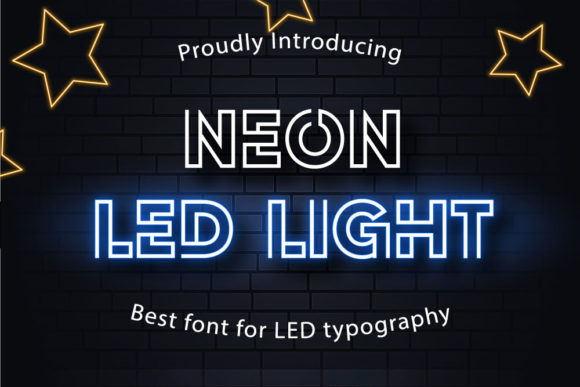
Neon Led Light: A Modern Display Font for High-Impact Design
In the competitive landscape of digital and print design, typography serves as more than just a vehicle for text; it is a primary tool for establishing mood, guiding attention, and reinforcing brand identity. Among the myriad of typefaces available to designers today, Neon Led Light has emerged as a distinct choice for projects requiring a futuristic, energetic, or retro-modern aesthetic. This article provides an objective evaluation of Neon Led Light, examining its visual characteristics, practical applications, and suitability for various professional workflows.
Understanding the Visual Identity of Neon Led Light
Neon Led Light is classified as a modern display font. Its design language draws heavily from the visual cues associated with illuminated signage, specifically the glowing tubes of LED technology and traditional neon lights. However, unlike fonts that rely on heavy outlines or complex drop shadows to simulate glow effects, Neon Led Light achieves its impact through clean, geometric forms and a specific weight distribution that suggests luminosity without clutter.
The "Light" designation in its name refers to the stroke weight, which is relatively thin compared to bold or black variants often found in similar thematic fonts. This thinness allows the letterforms to feel airy and delicate, mimicking the fragile yet bright nature of actual gas-discharge lighting. The result is a typeface that feels contemporary and sleek, avoiding the bulky appearance that can sometimes make retro-themed fonts feel dated or heavy-handed.
Key visual characteristics include:
- Geometric Precision: The letters are constructed with consistent curves and sharp angles, reflecting the manufactured precision of modern lighting fixtures.
- High Contrast: Despite being a "light" weight, the font maintains strong legibility due to the open counters (the enclosed spaces within letters like 'o' or 'e') and clear distinction between strokes.
- Minimalist Aesthetic: There is little ornamentation. The design relies on the shape of the characters themselves to convey energy, making it versatile for both dark and light backgrounds when paired correctly.
Practical Applications and Use Cases
While display fonts are generally not intended for long-form body text, Neon Led Light excels in contexts where immediate visual impact is required. Its strength lies in short bursts of information—titles, headlines, logos, and promotional graphics. Below are specific scenarios where this font demonstrates significant utility.
Entertainment and Nightlife Branding
The most obvious application for Neon Led Light is in the entertainment industry. Posters for concerts, flyers for club nights, and branding for bars or lounges benefit immensely from the font’s inherent association with nightlife and illumination. When used on dark backgrounds, such as deep navy, charcoal, or black, the thin strokes of Neon Led Light create a striking contrast that draws the eye immediately. It effectively communicates excitement and modernity without needing additional graphical elements to do the heavy lifting.
Tech and Gaming Interfaces
In the realm of technology and gaming, aesthetics often lean toward the futuristic and the digital. Neon Led Light fits seamlessly into user interface designs for mobile apps, video game menus, and website headers targeting younger demographics or tech-savvy audiences. Its clean lines align well with the minimalist trends prevalent in modern software design, while its thematic undertones add a layer of personality that standard sans-serif fonts might lack.
Retro-Futurism and Synthwave Design
There is a growing trend in graphic design known as "synthwave" or "retrowave," which combines 1980s nostalgia with futuristic elements. Neon Led Light is an excellent asset for this style. It captures the essence of analog neon signs while maintaining the crispness expected in digital media. Designers working on album covers, merchandise for music artists, or social media campaigns with a vintage-digital theme will find this font particularly effective.
Evaluating Quality, Usability, and Flexibility
When assessing any font for inclusion in a professional library, several technical and practical factors must be considered. Neon Led Light performs well across these metrics, though it does have specific limitations inherent to its classification as a display font.
Legibility and Readability
The primary challenge with thin, stylized fonts is legibility at small sizes. Neon Led Light is designed for large-scale presentation. When scaled down to body text sizes (typically under 14pt), the thin strokes may become difficult to read, especially on low-resolution screens or printed materials with imperfect ink coverage. Therefore, its usability is strictly confined to headings, subheadings, and standalone graphical text. Designers should avoid using it for paragraphs or instructional content.
Variety and Weight Options
A robust font family offers multiple weights to provide hierarchy and emphasis. If Neon Led Light is available in a range of weights (from Hairline to Black), it significantly enhances its value. A lighter weight can be used for subtle accents, while a heavier weight can serve as the main headline. Even if only the "Light" variant is available, it can still be effective when paired with bolder, neutral sans-serif fonts for supporting text. The key is balance; pairing the ethereal quality of Neon Led Light with a sturdy, grounded typeface creates a harmonious visual composition.
Compatibility and Licensing
For professionals, licensing terms are a critical consideration. Before incorporating Neon Led Light into client projects, it is essential to verify the license agreement. Some fonts are free for personal use but require a commercial license for business applications. Others may restrict usage in certain mediums, such as merchandise or broadcast media. Ensuring compliance protects both the designer and the client from potential legal issues. Additionally, checking file format compatibility (such as OTF, TTF, or WOFF2) ensures smooth integration into various design software and web platforms.
Who Benefits Most from Neon Led Light?
Not every project requires a specialized display font. Neon Led Light is best suited for specific groups of creators who prioritize atmosphere and style over neutrality.
- Freelance Graphic Designers: Those specializing in event marketing, hospitality, or entertainment will find this font to be a reliable tool for quickly establishing a desired mood.
- Digital Marketers: Social media managers creating eye-catching posts for Instagram, Pinterest, or Facebook ads can use Neon Led Light to stop the scroll. Its high contrast and thematic appeal make it ideal for promotional banners.
- Web Developers: Front-end developers building landing pages for tech startups, gaming companies, or creative agencies can utilize this font via CSS web fonts to enhance the site's visual identity without relying heavily on custom illustrations.
- Hobbyists and Content Creators: Bloggers and YouTubers looking to give their channels a unique, branded look can use this font for thumbnails and channel art to stand out in a crowded feed.
Potential Limitations and Best Practices
To get the most out of Neon Led Light, designers must be aware of its limitations. Overuse is a common pitfall. Because the font is visually dominant, using it excessively can lead to visual fatigue and reduce the overall professionalism of a design. It should be used sparingly as an accent rather than a primary text element.
Furthermore, color choice plays a crucial role in how Neon Led Light is perceived. While the font itself is neutral, its name and design evoke light. Using it in bright colors like electric blue, hot pink, or vibrant green against a dark background maximizes its intended effect. Conversely, using it in muted tones on a white background may diminish its impact, making it appear faint or incomplete. Experimentation with color palettes is recommended to find the optimal combination for each specific project.
Another consideration is kerning and spacing. Thin fonts can sometimes suffer from uneven visual weight if characters are spaced too tightly or too loosely. Designers should pay close attention to the tracking (letter-spacing) to ensure that the airy nature of the font is preserved without compromising readability. Slightly increased spacing can often enhance the elegant, glowing effect that Neon Led Light aims to achieve.
Conclusion
Neon Led Light represents a thoughtful addition to any modern typographic toolkit. By combining the nostalgic allure of neon signage with the clean precision of contemporary design, it offers a versatile solution for projects that need to convey energy, modernity, and style. While it is not a substitute for functional body text, its ability to command attention and set a specific tone makes it invaluable for headlines, logos, and promotional materials. For professionals seeking to inject a touch of futuristic flair into their work, Neon Led Light provides a reliable, aesthetically pleasing, and effective option. As with all design resources, its success depends on appropriate context, careful pairing with complementary fonts, and mindful application. When used correctly, it transforms ordinary layouts into engaging visual experiences.