Evaluating Throq for High-Impact Halloween Typography and Design Projects
Selecting the right typeface is rarely just about aesthetics; it is a strategic decision that influences readability, brand perception, and emotional resonance. When designing for specific themes—particularly those requiring immediate visual impact like horror or seasonal events—the margin for error shrinks significantly. In this context, Throq emerges as a specialized tool within the display font category. It is not merely a decorative element but a deliberate design choice intended to evoke specific psychological responses through its bold, scary, and cool aesthetic profile.
For designers, crafters, and marketers aged 20–50 who are evaluating typography options, understanding the nuanced application of a font like Throq requires looking beyond its initial "spooky" appeal. This analysis explores where Throq fits within the broader landscape of display fonts, how it compares to alternative styles, and the practical tradeoffs involved in using it for Halloween-related projects or any creative endeavor demanding high-contrast visual hierarchy.
Defining the Visual Identity of Throq
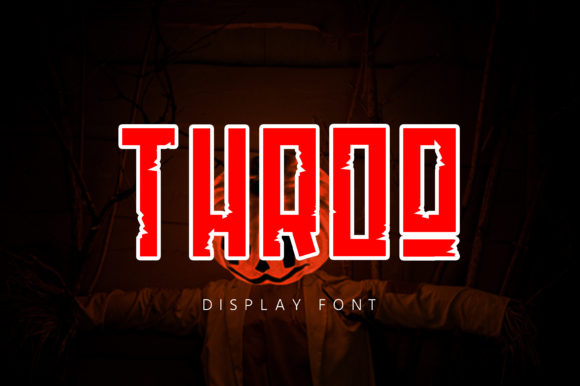
Throq belongs to the family of display fonts, which are designed for large sizes rather than body text. Its defining characteristic is its aggressive, stylized form. The term "cool" in typography often refers to a sleek, modern, or detached aesthetic, while "scary" implies irregularity, sharpness, or unease. Throq successfully merges these contradictory qualities. It avoids the clichéd "dripping blood" look of many amateur horror fonts by maintaining a structural integrity that feels professional yet menacing.
The font’s distinctiveness lies in its weight and edge treatment. Unlike standard serif or sans-serif fonts that prioritize neutrality, Throq commands attention. It is engineered to be read quickly from a distance, making it ideal for posters, banners, and packaging. However, this strength is also its primary limitation. The very features that make it striking—its distorted forms and heavy contrast—render it nearly illegible at small sizes. Therefore, the decision to use Throq must always be weighed against the medium of distribution.
The Psychology of Fear and Style
In design psychology, fear is often communicated through asymmetry, jagged lines, and high contrast. Throq leverages these principles without relying on explicit gore or shock value. This makes it versatile. While it is perfectly suitable for Halloween-related projects, its aesthetic does not strictly confine it to October. A brand seeking to convey edginess, rebellion, or intensity might find Throq useful for album covers, concert flyers, or limited-edition product launches. The "cool" factor allows it to bridge the gap between traditional horror and contemporary streetwear aesthetics.
When comparing Throq to other spooky fonts, one must consider the level of abstraction. Some horror fonts rely on literal imagery (e.g., letters made of bones), while others, like Throq, rely on typographic distortion. The latter is generally more scalable and easier to integrate into complex layouts because it behaves more like standard letterforms, albeit heavily stylized. This distinction is crucial for designers who need to maintain a cohesive visual language across multiple touchpoints.
Comparative Analysis: Throq vs. Alternative Display Approaches
No single font is universally superior. The effectiveness of Throq depends entirely on the specific goals of the project. To make an informed decision, it is helpful to compare Throq against three common alternatives: classic serif horror fonts, grunge textures, and minimalist gothic scripts.
Throq vs. Classic Serif Horror Fonts
Classic serif horror fonts often draw inspiration from Victorian era printing or medieval manuscripts. They evoke a sense of history, dread, and old-world mystery. Throq, by contrast, feels more modern and industrial. If a project requires a nostalgic or literary feel—such as a book cover for a classic ghost story—a serif option might be more appropriate. Throq works better for projects that aim to feel immediate, loud, and contemporary. The tradeoff here is timelessness versus trendiness. Throq may date faster than a well-crafted serif, but it offers higher immediate impact.
Throq vs. Grunge and Texture-Based Fonts
Grunge fonts incorporate noise, scratches, and uneven edges to simulate decay. While visually interesting, they can be difficult to read and challenging to reproduce consistently across different print mediums. Throq maintains cleaner vector paths despite its scary appearance. This makes it more reliable for digital screens and large-format printing where resolution consistency matters. For crafty ideas involving vinyl cutting or laser engraving, Throq’s clearer structure often yields better results than highly textured alternatives, which may lose detail during production.
Throq vs. Gothic Scripts
Blackletter or Gothic script fonts offer elegance and tradition. They are often associated with metal music or formal invitations. Throq lacks the ornamental complexity of blackletter but compensates with raw power. If the goal is sophistication mixed with darkness, a gothic script is the better choice. If the goal is intimidation and boldness, Throq takes precedence. The decision factor here is tone: is the message whispering or shouting?
Practical Applications and Use Cases
Understanding when to deploy Throq requires identifying scenarios where its strengths align with user needs. Below are specific contexts where Throq excels, along with considerations for each.
- Halloween Event Posters: The high contrast and bold nature of Throq ensure visibility from a distance. It grabs attention in crowded environments. However, pairing it with legible body text is essential to provide event details.
- Craft Projects and DIY Decor: For those creating custom signs, t-shirts, or party favors, Throq provides a professional finish. Its clean lines make it suitable for cutting machines, ensuring that the final product looks polished rather than homemade. The "cool" aspect appeals to adults looking for stylish decor rather than childish scare tactics.
- Social Media Graphics: In a feed dominated by images, text overlays need to stand out. Throq serves as an effective hook for Instagram stories or YouTube thumbnails. Its ability to convey mood instantly helps increase click-through rates for horror-themed content.
- Packaging Design: Limited edition products benefit from the uniqueness of Throq. It signals that the item is special or intense. However, brands must ensure that the font does not overshadow the product itself. Balance is key.
Evaluating Limitations and Tradeoffs
While Throq is a powerful tool, it is not without limitations. Recognizing these constraints is vital for avoiding design failures.
Legibility is the primary concern. Throq should never be used for paragraphs of text. Even short phrases can become difficult to decipher if kerning is not carefully managed. Designers must allow ample negative space around the letters to prevent visual clutter. Overcrowding Throq negates its impact and turns it into noise.
Versatility is limited. Because Throq has such a strong personality, it clashes easily with other busy elements. It requires a minimalist background or complementary simple graphics to shine. Attempting to combine Throq with intricate patterns or multiple competing fonts will result in a chaotic design. It demands respect and isolation within the layout.
Contextual appropriateness. Using Throq in a professional corporate setting or a formal invitation would likely be perceived as unprofessional or inappropriate. It is a niche font best suited for entertainment, lifestyle, and creative industries. Misapplying it can damage credibility.
Decision Framework: Choosing the Right Tool
To determine if Throq is the right choice for your next project, consider the following decision factors:
- What is the primary emotion you want to evoke? If the answer is excitement, fear, or intensity, Throq is a strong candidate. If calmness or clarity is the goal, look elsewhere.
- Where will the text be displayed? For large formats (posters, banners) or digital headers, Throq performs well. For mobile body text or fine print, avoid it.
- Who is the target audience? Adults aged 20–50 who appreciate modern design trends are more likely to respond positively to Throq’s "cool" aesthetic compared to older demographics who may prefer traditional readability.
- What is the available space? Does the layout allow for generous spacing? Throq needs room to breathe. Tight layouts will diminish its effect.
If the answers to these questions align with Throq’s characteristics, it is likely a suitable choice. However, if the project requires subtlety, long-form reading, or broad commercial appeal, a more neutral display font or a classic serif might serve the purpose better. The "limit is your imagination" claim holds true only if the foundation of the design remains solid. Throq is a potent ingredient, not the entire meal.
Conclusion
Throq stands out in the crowded market of display fonts due to its unique blend of cool modernism and scary aggression. It offers a sophisticated alternative to generic horror tropes, making it valuable for both seasonal Halloween projects and year-round edgy branding. By understanding its strengths in high-impact visibility and its weaknesses in legibility and versatility, designers can leverage Throq effectively. The key lies in restraint: using Throq sparingly, pairing it with readable typefaces, and respecting the space it occupies. When applied with intention, Throq transforms ordinary designs into memorable experiences, proving that the right typographic choice can indeed elevate a project from good to exceptional.