Typis: Redefining Modern Typography with Geometric Precision
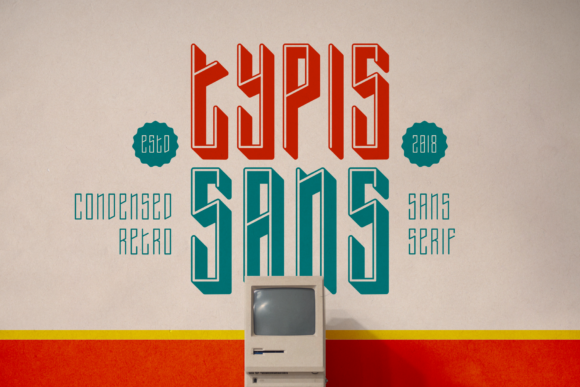
In an era where digital attention spans are shrinking and visual competition is fiercer than ever, the role of typography has shifted from a mere vehicle for text to a primary driver of brand identity. Among the myriad of typefaces available to designers today, Typis stands out as a compelling solution for those seeking a balance between structural rigor and contemporary flair. This cool and geometric styled display font is not just another addition to a design library; it represents a specific aesthetic choice that speaks directly to modern sensibilities—clean, confident, and unmistakably current.
For professionals ranging from freelance graphic designers to marketing directors at established firms, selecting the right typeface can make or break a project’s visual impact. Typis addresses this need by offering a distinct character set that commands attention without sacrificing readability in large formats. Its sharp angles and uniform stroke weights create a sense of order and sophistication, making it ideal for writing web designs, business cards, or pretty much anything else that requires a modern touch. But why is a geometric sans-serif suddenly becoming a staple in high-end design workflows? The answer lies in the intersection of technological advancement, shifting consumer expectations, and the evolving language of digital communication.
The Evolution of Display Typography
To understand the relevance of Typis, one must first look at the broader trajectory of display typography. For decades, serif fonts dominated editorial and print media, conveying tradition, authority, and trust. However, the digital revolution demanded clarity on screens of varying sizes and resolutions. This led to the rise of grotesque and neo-grotesque sans-serifs like Helvetica and Arial, which prioritized neutrality over personality. While effective, these fonts often lacked the distinctive "voice" required to help brands stand out in a saturated market.
As we moved into the 2020s, a new trend emerged: the return of personality through geometry. Designers began looking for typefaces that could convey innovation, tech-savviness, and minimalism simultaneously. Geometric sans-serifs, which construct letterforms based on simple geometric shapes like circles, squares, and triangles, became the go-to choice for startups, tech companies, and lifestyle brands. Typis fits squarely into this evolution. It takes the foundational principles of geometric design but refines them to ensure they work harmoniously across different media.
This shift is not merely aesthetic; it reflects a change in user expectations. Modern users are accustomed to clean interfaces, fast-loading pages, and straightforward navigation. A cluttered or overly decorative typeface can feel outdated or distracting. By using a font like Typis, creators align their visual language with the streamlined experiences users now expect. The font’s crisp lines mirror the precision of high-resolution displays and vector-based graphics, creating a cohesive visual ecosystem that feels native to the digital age.
Why Geometry Works in Modern Design
The appeal of Typis lies in its geometric structure, which offers several practical advantages for designers and businesses alike. First, geometric fonts inherently possess a sense of stability and balance. Because the letters are constructed from consistent shapes, they create a rhythmic visual flow that is pleasing to the eye. This consistency helps guide the viewer’s gaze, making headlines more impactful and easier to process quickly.
- Visual Hierarchy: The strong contrast between the bold weight of Typis and standard body text allows for clear hierarchy. Designers can use the font for large headings to grab attention, while relying on simpler sans-serifs for paragraphs.
- Brand Memorability: In a crowded marketplace, uniqueness is key. Typis’s distinct angularity gives brands a signature look that is easily recognizable, even at small sizes.
- Versatility Across Media: Whether printed on matte paper or displayed on an OLED screen, the geometric forms of Typis maintain their integrity. There is no loss of detail or awkward distortion, ensuring a consistent brand presence across all touchpoints.
Furthermore, the minimalist nature of geometric design aligns with the "less is more" philosophy that has permeated interior design, product development, and user interface (UI) design. Consumers are increasingly drawn to products and services that present themselves with clarity and honesty. A typeface that eschews unnecessary ornamentation in favor of pure form communicates transparency and efficiency—qualities highly valued in today’s business environment.
Practical Applications for Professionals
While Typis is undeniably striking, its true value is realized in how it is applied. Understanding where and how to use this font is crucial for maximizing its potential. Here are some practical scenarios where Typis excels:
Web Design and User Interfaces
In web design, the hero section—the large banner area at the top of a homepage—is prime real estate for display typography. Typis can be used here to deliver a powerful message instantly. Its geometric cuts complement the grid-based layouts common in modern web design, creating a seamless integration between text and structure. Additionally, because geometric fonts often have open apertures (the openings in letters like 'C' or 'e'), they tend to remain legible even when scaled down or viewed on smaller mobile devices.
However, caution is advised. Like many display fonts, Typis should not be overused for long-form body copy. Its strong personality can become fatiguing if readers are forced to navigate dense paragraphs of geometric text. Instead, pair Typis with a neutral, highly readable sans-serif for body content. This combination leverages the best of both worlds: the head-turning quality of Typis for titles and the comfort of a standard font for reading.
Branding and Identity Systems
For entrepreneurs and business owners, establishing a strong visual identity is critical. Typis offers a versatile toolkit for logo design, stationery, and marketing collateral. Its clean lines translate well to vector formats, making it easy to scale for everything from favicon icons to billboard advertisements. The font’s modern aesthetic suggests that a brand is forward-thinking and innovative, which can be particularly appealing to tech-savvy audiences or younger demographics.
Consider a fintech startup aiming to project reliability and cutting-edge technology. A logo featuring Typis would communicate precision and stability. Similarly, a luxury fashion brand might use Typis for its lookbook headers, leveraging the font’s sleekness to evoke a sense of exclusivity and high fashion. The adaptability of Typis allows it to span multiple industries, provided it is paired with appropriate imagery and color palettes.
Print Media and Packaging
Despite the dominance of digital media, print remains a tangible and impactful medium. Business cards, brochures, and product packaging benefit greatly from the tactile quality of well-chosen typography. Typis, with its bold presence, ensures that printed materials do not get lost in the stack. On a business card, for instance, using Typis for the name or title creates an immediate impression of professionalism and style.
When designing for print, consider the interaction between ink and paper. The sharp edges of Typis may require careful attention to printing techniques to avoid bleed or smudging, especially on porous papers. However, on coated or textured stocks, the font’s geometric details can pop, adding a layer of sophistication that enhances the perceived value of the product or service being presented.
Integrating Typis into Creative Workflows
For freelancers and creative agencies, efficiency is paramount. Typis simplifies the design process by reducing the need for excessive customization. Because the font itself carries such a strong voice, designers spend less time tweaking kerning pairs or adjusting weights to achieve a desired look. This allows more time to focus on layout, imagery, and overall strategy.
Moreover, Typis supports a wide range of weights and styles, typically including regular, bold, and sometimes italic variants. This flexibility enables designers to create dynamic compositions within a single family. Using different weights of Typis can add depth and interest to a design without introducing conflicting typefaces. For example, a magazine layout might use Typis Bold for pull quotes and Typis Regular for captions, creating a unified yet varied typographic system.
It is also worth noting the importance of accessibility. As digital inclusion becomes a priority, designers must ensure their choices do not exclude users with visual impairments. While Typis is primarily a display font, its clear geometric forms generally offer good legibility. When using it for any functional text, always test against accessibility standards, such as WCAG (Web Content Accessibility Guidelines), to ensure sufficient contrast and size.
The Future of Geometric Fonts
Looking ahead, the demand for fonts that bridge the gap between art and utility will only grow. As augmented reality (AR) and virtual reality (VR) become more prevalent, typography will need to perform in three-dimensional spaces. Geometric fonts like Typis, with their predictable structures and clean lines, are well-suited for these emerging environments. They render clearly in 3D space and maintain their identity regardless of viewing angle or distance.
Additionally, the trend toward personalization in digital experiences means that static typefaces may eventually give way to variable fonts. Typis’s geometric foundation makes it an excellent candidate for variable font technology, allowing for smooth transitions between weights and widths. This could enable websites to animate their typography in response to user interaction, creating more engaging and immersive experiences.
Ultimately, the enduring appeal of Typis lies in its ability to adapt to changing trends while maintaining its core identity. It is a font that respects the past traditions of graphic design while embracing the possibilities of the future. For anyone looking to inject a modern, geometric flair into their projects, Typis offers a reliable and stylish solution.
Conclusion
In conclusion, Typis is more than just a cool and geometric styled display font; it is a strategic tool for modern communication. Its clean lines and structured forms resonate with contemporary tastes, making it ideal for writing web designs, business cards, or pretty much anything else that requires a modern touch. By understanding its strengths and limitations, designers and businesses can leverage Typis to create visuals that are not only aesthetically pleasing but also effective in conveying their intended message.
As we continue to navigate a world filled with visual noise, the ability to communicate clearly and elegantly becomes a superpower. Typis provides that power, offering a timeless yet timely option for those who wish to stand out. Whether you are a seasoned professional or a curious hobbyist, incorporating Typis into your workflow can elevate your designs and enhance your brand’s presence in the digital landscape.