The Art of Casual Clarity: Why Little Bright is the Quirky Choice for Modern Design
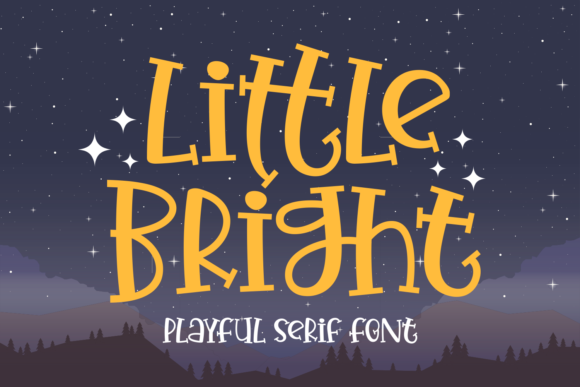
In a digital landscape often dominated by sterile minimalism and rigid corporate structures, there is a growing appetite for personality. Audiences are increasingly drawn to content that feels human, approachable, and authentic. This shift has elevated the importance of typography beyond mere legibility to become a primary vehicle for brand voice and emotional connection. Among the tools available to designers and creators, Little Bright stands out as a distinctive asset. It is not just a font; it is a statement of intent—a playful and quirky display typeface that brings an informal style and casual vibe to any project.
Understanding the nuances of display fonts requires looking beyond standard readability metrics. While body text demands consistency and neutrality, display typography is where character lives. Little Bright exemplifies this principle. Its design philosophy centers on creating a relaxed touch, making it an ideal companion for projects that need to break the ice, spark joy, or simply stand out in a crowded feed. This article explores the practical applications, aesthetic advantages, and strategic considerations of integrating this unique typeface into your visual workflow.
Deconstructing the Aesthetic: What Makes Little Bright Unique?
To appreciate the utility of Little Bright, one must first understand its visual language. The font is characterized by its irregularities—those subtle imperfections that mimic hand-lettering without sacrificing structural integrity. Unlike geometric sans-serifs that rely on mathematical precision, Little Bright embraces asymmetry. The strokes vary in weight, the terminals often feature playful curls or sharp angles, and the overall x-height creates a sense of bouncy energy.
This informal style serves a specific psychological function. When a viewer encounters a typeface that looks "drawn" rather than "typed," their brain registers the content as more personal and less automated. In an era where AI-generated content is ubiquitous, using a font like Little Bright signals human curation. It suggests that a real person made deliberate choices about how the message is presented. The casual vibe does not imply carelessness; rather, it implies confidence. It says, "We are comfortable enough to be fun."
The quirkiness of the letterforms also aids in memorability. Human brains are wired to notice anomalies. The distinct shapes of the letters in Little Bright create visual hooks that help logos, headlines, and key phrases stick in the viewer's mind long after they have scrolled past. This mnemonic quality is invaluable for branding efforts where recall is paramount.
Strategic Applications Across Industries
The versatility of Little Bright allows it to transcend niche markets. While it might seem too informal for traditional banking or legal sectors, its application is surprisingly broad when used with strategic restraint. Here is how different professional groups can leverage this font effectively.
Branding and Identity Design
For startups and small businesses, establishing a friendly brand identity is crucial for building trust with early adopters. Little Bright is particularly effective for logo lockups, especially in industries such as food and beverage, children’s products, wellness, and lifestyle services. A coffee shop aiming to position itself as a community hub might use Little Bright for its signage to evoke warmth and neighborliness. Similarly, a boutique skincare brand could use it to suggest natural, handmade ingredients rather than clinical laboratory results.
When designing brand guidelines, it is essential to pair Little Bright with a neutral, highly legible sans-serif for body copy. This contrast ensures that while the brand voice remains playful in headlines, the information remains accessible and clear in detailed descriptions.
Digital Marketing and Social Media
Social media platforms are visually driven environments where attention spans are fleeting. Static images and short-form videos compete for eye contact in milliseconds. Using Little Bright in social graphics can significantly increase engagement rates by breaking the visual monotony of standard templates. It works exceptionally well for:
- Quote Cards: Adding personality to user-generated content or inspirational quotes.
- Promotional Banners: Highlighting sales events, flash deals, or new product launches with an energetic tone.
- Event Posters: Creating flyers for workshops, pop-up shops, or community gatherings that aim to feel inclusive and low-pressure.
The font’s ability to convey excitement without shouting makes it a superior choice over all-caps bold headers, which can sometimes come across as aggressive or spammy.
Educational and Non-Profit Materials
Educators and non-profit organizations often struggle to make serious topics feel approachable. Whether teaching complex scientific concepts to young students or fundraising for a local charity, reducing intimidation is key. Little Bright can soften the edges of heavy subjects. A science museum exhibit label written in a mix of Little Bright for the title and a clean serif for the explanation invites curiosity rather than demanding academic rigor. This approach lowers the barrier to entry for learners, encouraging exploration.
Practical Implementation: Best Practices for Usage
While Little Bright is a powerful tool, misusing it can lead to designs that appear unprofessional or difficult to read. To harness its full potential, designers should adhere to several best practices regarding hierarchy, pairing, and context.
Mastery of Hierarchy
Display fonts are designed to be seen from a distance or at large sizes. They lose their charm when scaled down to paragraph text. The irregular details that give Little Bright its character become muddy and illegible at small point sizes. Therefore, its primary role should always be that of a headline, subhead, or accent word. Use it to draw the eye to the most important piece of information, then let a more neutral font handle the supporting details.
A common mistake is overusing the font throughout a layout. If every line is quirky, nothing stands out. Reserve Little Bright for key moments in the design journey. For example, in a newsletter, use it only for the subject line and major section breaks, allowing the body text to remain easy to scan.
Font Pairing Strategies
Creating a balanced typographic system involves contrasting styles. Since Little Bright is informal, quirky, and somewhat irregular, it pairs best with fonts that are structured, calm, and geometric. Good partners include:
- Clean Sans-Serifs: Fonts like Helvetica, Roboto, or Open Sans provide a stable foundation that allows Little Bright to shine without competing for attention.
- Classic Serifs: A traditional serif font can create a sophisticated "high-low" contrast, blending the playfulness of Little Bright with the authority of print tradition. This is effective for editorial designs or magazine layouts.
- Monospaced Fonts: For a tech-forward or retro-modern look, pairing Little Bright with a monospace font can create a striking, eclectic aesthetic popular in contemporary web design.
Avoid pairing Little Bright with other decorative or script fonts. The combination of multiple high-energy typefaces creates visual noise and confusion, undermining the clarity of the message.
Color and Context Considerations
The mood of Little Bright can be shifted through color psychology. Vibrant, saturated colors amplify its playful nature, making it perfect for youth-oriented brands or creative agencies. Conversely, using Little Bright in muted tones like sage green, dusty blue, or charcoal grey can lend it a more subdued, artisanal feel. This flexibility allows the font to adapt to various brand palettes without losing its core identity.
Consider the medium of delivery as well. On screen, the pixel rendering of Little Bright should be checked at various resolutions to ensure the quirks remain crisp. Print materials offer more latitude, but ink bleed can sometimes obscure the finer details of the letterforms, so testing proofs is advisable.
Emerging Trends and Future Relevance
The trend toward "human-centric design" shows no signs of slowing down. As artificial intelligence becomes more prevalent in content creation, the demand for tangible, human-made aesthetics will likely increase. Hand-drawn and imperfect typography represents the antithesis of algorithmic perfection. Consequently, fonts like Little Bright are poised to gain relevance as brands seek to differentiate themselves through authenticity.
Furthermore, the rise of personalized marketing means that generic templates are becoming less effective. Creators are looking for assets that allow for quick customization and immediate emotional resonance. Little Bright offers this by providing a ready-made personality that saves time in the conceptual phase of design. It allows professionals to focus on strategy and messaging while relying on the typography to handle the emotional tone.
In the realm of user experience (UX) design, micro-interactions often benefit from playful typography. Button labels, error messages, and confirmation screens are prime candidates for a touch of humor or lightness. Implementing Little Bright in these micro-copy elements can reduce user frustration and improve satisfaction scores. A "404 Not Found" page styled with Little Bright feels like a gentle nudge rather than a harsh rejection.
Conclusion: Embracing the Relaxed Touch
Selecting a typeface is never just an aesthetic decision; it is a communication strategy. Little Bright offers a compelling solution for those who wish to communicate with clarity while maintaining a relaxed, engaging presence. Its informal style and casual vibe make it a go-to choice for creations that require a human touch, whether that be in a brand logo, a social media campaign, or an educational resource.
By understanding its strengths and limitations, designers and business owners can deploy Little Bright strategically to enhance their visual storytelling. It bridges the gap between professionalism and approachability, proving that being serious about your work does not mean you cannot have fun with it. In a world that is constantly moving fast, giving your audience a moment of visual delight through thoughtful typography is a powerful way to connect.